Selling a waterfront home in Osterville is rarely about putting a sign in the yard and waiting for the right offer. Buyers in this market are careful, highly informed, and often comparing several exceptional properties at once. If you want to protect value and position your home for a premium sale, preparation matters well before the listing goes live. Let’s dive in.
Why preparation matters in Osterville
Osterville sellers are entering a Cape Cod market that has become more balanced. According to the 2025 year-end Cape Cod market report from CCIAOR, the market posted 3,507 home sales, a 95.2% original list-price-to-sale-price ratio, 2.0 months of supply, and 58 cumulative days on market for single-family homes.
That matters because buyers still want waterfront property, but they have more time to compare condition, documentation, and overall presentation. In a normalized market, the homes that feel complete, credible, and easy to understand often stand apart.
Start with pre-listing due diligence
Before photography, staging, or showings, make sure your paperwork and core property systems are in order. Waterfront buyers tend to ask detailed questions early, and your ability to answer them clearly can help protect both momentum and price.
Confirm septic compliance
If your property has a septic system or cesspool, a MassDEP Title 5 inspection is generally required when you sell. In most sale-related cases, that inspection is valid for two years, or three years if the system is pumped annually and records are available.
This is especially important for waterfront homes. MassDEP notes that failing systems can affect drinking water, shellfish beds, and beaches, so unresolved septic issues can quickly become a negotiation point.
Get smoke and CO compliance handled early
Massachusetts requires a smoke and carbon monoxide alarm certificate of compliance when a home is sold or transferred. It is a simple step, but it can create delays if left to the last minute.
For older coastal homes, it is wise to complete this before your media schedule and showing calendar begin. A clean pre-listing process signals that the home has been responsibly maintained.
Review flood zone details
In Barnstable, flood documentation is not a side issue for waterfront property. The town notes in its floodplain planning materials that Barnstable has 170 miles of coastline and faces significant climate-related vulnerability.
FEMA flood maps help determine insurance requirements, and homes in high-risk zones with government-backed mortgages are generally required to carry flood insurance. Before listing, gather any available elevation, insurance, and flood-zone information so buyers can evaluate the property with confidence.
Verify dock and mooring details
If your home includes a dock, pier, or mooring as part of its appeal, verify those rights and approvals in writing. Barnstable regulates private docks and piers, including features such as materials, lighting, dimensions, and environmental impact.
Moorings require annual permits, and Barnstable also makes clear that the permit is issued to the vessel owner. The mooring location does not automatically transfer to a buyer, so your marketing should explain exactly what is and is not included.
Present the shoreline carefully
Waterfront buyers notice the shoreline immediately. They are not only responding to beauty, but also to how the property appears to have been managed over time.
Keep the waterfront natural and orderly
Barnstable’s buffer-zone rules offer a useful guide. The town defines a 50-foot undisturbed buffer as natural, unmanaged vegetation without lawns, gardens, ornamental plants, or hardscape.
In practical terms, your shoreline should feel healthy, stable, and well cared for. Over-clearing can raise concerns, while a natural and orderly edge often supports the overall value story more effectively.
Make sure the dock looks credible
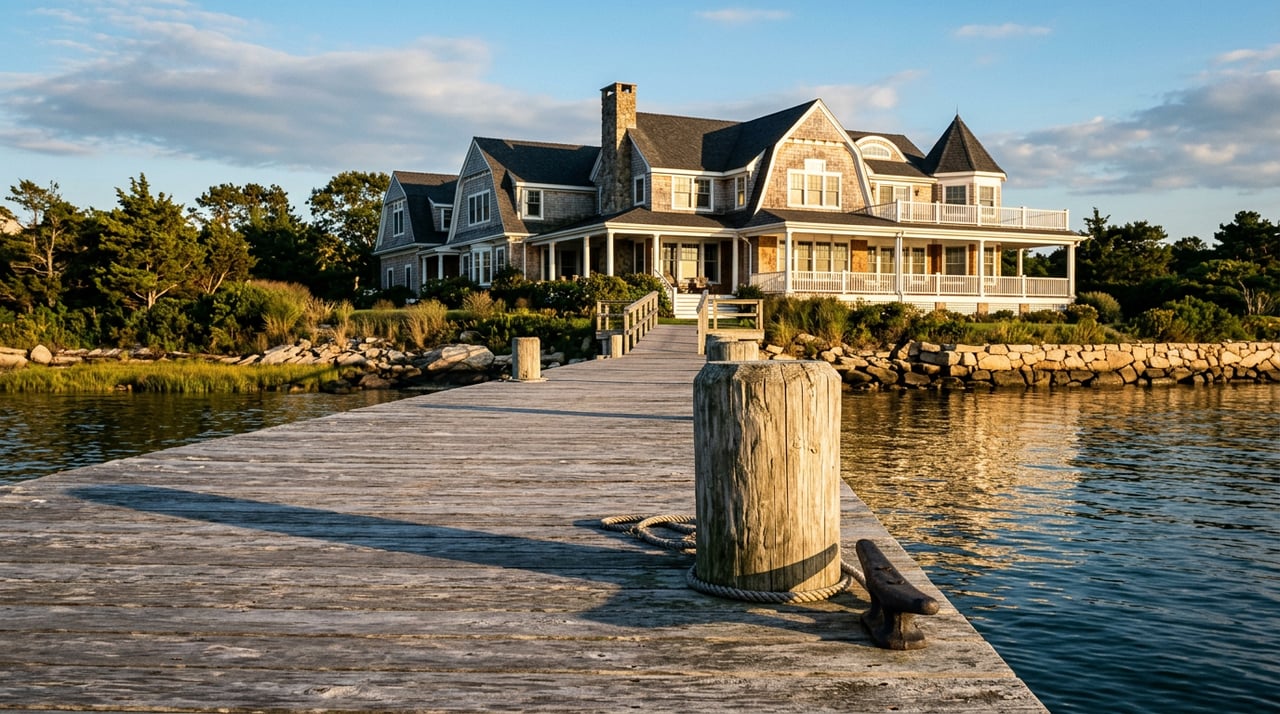
A dock or pier should never feel like an afterthought in the sales process. Because Barnstable treats these structures as regulated features, buyers will naturally want to know whether they are maintained and properly documented.
Freshen visible wear where appropriate, organize the approach, and gather any permits or supporting records before launch. A dock that appears intentional and well-kept is much easier to market than one that raises questions.
Build a strong digital first impression
Today’s waterfront listing has to perform online before it performs in person. Buyers are doing substantial screening before they ever request a tour.
According to the 2024 NAR Profile of Home Buyers and Sellers, 43% of buyers started their home search online, all buyers used the internet, 41% said photos were very useful, and 31% valued floor plans. NAR also found that some buyers viewed homes online only, which means your listing needs to communicate both beauty and substance from the start.
Invest in professional visuals
For an Osterville waterfront home, professional still photography is essential. Aerial imagery, floor plans, and video can also help buyers understand the relationship between the house, water, shoreline, and outdoor spaces.
This is particularly important in a premium segment, where setting often drives value as much as the interior itself. The goal is not simply to showcase rooms, but to tell a clear visual story about how the property lives.
Stage the rooms that frame the view
Staging remains a useful tool, even at the high end. In NAR’s 2025 staging snapshot, 83% of buyers’ agents said staging made it easier for a buyer to visualize a home as their future home.
The most commonly staged rooms were the living room, primary bedroom, and dining room. In a waterfront property, those rooms often carry the view narrative, so they deserve the most editing and refinement before photography and showings.
Tell the lifestyle story accurately
Osterville buyers often care about privacy, shoreline access, boating convenience, and club-related lifestyle details. Those elements can support value, but only when they are described carefully and accurately.
Be precise about club access
If your property is associated with a club setting or a private community context, spell out the facts. The Cape Cod Commission describes Oyster Harbors as a private, gated island community, and official Wianno Club information indicates the club hosts member events or events sponsored by a member.
That means membership, guest access, and any related fees should be treated as specific disclosures, not broad assumptions. For premium buyers, clarity on these points can prevent confusion later in the process.
Focus showings on what buyers cannot learn online
Many waterfront buyers are already doing meaningful online research and working through an agent. Because of that, private showings are often more effective than broad open-house traffic for a premium Osterville property.
An in-person visit should help a buyer understand the details that are harder to communicate online, such as shoreline access, dock configuration, flood-related considerations, vegetation buffers, and the day-to-day feel of the setting.
Answer buyer questions before they ask
The most effective premium listings anticipate buyer concerns instead of reacting to them. When the information is ready up front, negotiations often move more smoothly.
Before launching your home, be prepared to answer questions about:
- Septic inspection status and maintenance records
- Flood zone location and insurance considerations
- Dock or pier permitting
- Mooring status and transfer limitations
- Club access, if relevant
- Shoreline vegetation and buffer-zone rules
This kind of preparation gives buyers confidence that the property has been managed thoughtfully. In a market where buyers have options, confidence is valuable.
Position your home for a stronger result
A premium waterfront sale in Osterville is part presentation, part documentation, and part strategy. When your home is visually compelling, factually well-prepared, and marketed with precision, you give buyers fewer reasons to hesitate and more reasons to act.
If you are considering a sale and want a discreet, highly tailored plan for your waterfront property, Robert Kinlin offers the presentation-driven guidance and concierge-level service that premium Cape Cod homes deserve.
FAQs
What should you fix before selling an Osterville waterfront home?
- Focus first on issues that affect buyer confidence, including septic compliance, smoke and CO certificate requirements, flood-related documentation, and the condition and records for any dock or pier.
Does a septic inspection matter when selling a waterfront home in Osterville?
- Yes. Massachusetts generally requires a Title 5 inspection for properties with septic systems or cesspools when they are sold, and waterfront buyers often expect that documentation early.
Can a mooring transfer with a waterfront home sale in Barnstable?
- Not automatically. Barnstable states that mooring permits are issued to the vessel owner and the location cannot simply be assumed to transfer to the buyer.
Why are professional photos important for an Osterville waterfront listing?
- NAR reports that all buyers use the internet and many rely heavily on photos and floor plans, so strong visuals help your home compete before a showing is ever scheduled.
What buyer questions should you answer before listing an Osterville waterfront property?
- Be ready to explain septic status, flood-zone details, possible insurance requirements, dock or mooring documentation, any club-related rules, and applicable shoreline buffer considerations.