A buyer walks into Back Bay with a number in mind. It arrived from a portal, it looks like $1.5 million, and it is the median for the three months ending May 2026. The number is accurate. It is also close to useless once the condo questionnaire comes back.
Two units on the same block, both listed near that median, can hand a new owner two entirely different lives. One will read as a bargain until the façade project is voted on. The other will feel expensive on day one and stay predictable for a decade. The purchase decision in Back Bay is really a decision between two ledgers, and the median price is silent on both.
The Number That Isn't the Number
The Back Bay condo market in 2026 is quieter than its reputation suggests. Redfin's snapshot for the three months ending May 2026 put the neighborhood median at roughly $1.5 million with about 35 days on market and a sale-to-list ratio of 97.4 percent. A separate mid-market view showed 112 active condos at a $1.69M median list, roughly one offer per listing, and 46 days on market, materially slower than Boston condos overall.
That headline flattens a spread that matters more than the average. Back Bay East showed a $2.27M median list price in the same window while Back Bay West sat at $1.05M and Prudential–St. Botolph at $1.73M. A buyer shopping "Back Bay at the median" is really shopping four different micro-markets whose only shared feature is the ZIP code. The interesting variance is not price. It is the shape of the monthly carry underneath.
What the Monthly Actually Buys
Massachusetts condominium law requires every association to maintain a replacement reserve fund collected as part of common expenses, so every dues line is doing at least two jobs at once: running the building this month, and saving for the building fifteen years out. The ratio between those two jobs is where Back Bay buildings diverge.
A useful sample from listings and recent sales in the neighborhood:
| Building | Type | Monthly HOA | What the fee tends to fund |
|---|---|---|---|
| 457 Beacon St #5 (recent sale) | Small brownstone assoc. | $290 | Basics; owners carry more directly |
| 481 Beacon St | Brownstone conversion | $711 | Basics plus modest reserve |
| The Clarendon, 400 Stuart St | Full-service tower | $2,047 | Heat, gas, water, sewer, insurance, security, structure and grounds, snow, trash, A/C, reserves |
| One Dalton (Four Seasons Residences) | Ultra-luxury tower | $3,673+ | 24/7 staff, valet, concierge, pool, fitness, full amenity load |
The Clarendon's disclosure at 400 Stuart is a good read on what a bundled fee actually contains: heat, gas, water, sewer, insurance, security, structure and grounds maintenance, road maintenance, snow removal, trash, air conditioning, and reserve funds. A general planning range for Back Bay luxury buildings runs roughly $1.00 to $3.50 per square foot per month, with full-service towers toward the top of the band. Ultra-luxury programs at One Dalton and the St. Regis Residences can carry $4,000 to $7,000 per month once staffing and amenities are fully loaded.
Read horizontally, this looks like a spectrum from cheap to expensive. Read vertically, it is a choice about which risks the association absorbs and which the owner keeps.
The Reserve Question Brownstones Front-Load
The $290 and $711 figures are not evidence that a brownstone is cheaper to own. They are evidence that the owner is retaining the risk of any project that a tower would have folded into dues years earlier. A small association with ten units and a lean budget can look attractive until a masonry contractor's estimate lands on the treasurer's desk.
The Back Bay Architectural Commission's own docket makes the pattern visible. Its recent 2026 hearings have taken up unapproved masonry repairs at 72 Commonwealth Avenue and 345 Beacon Street as violations, alongside routine approvals for masonry repointing at 190, 199, 311, 352, 396 addresses, and window replacement projects at 191 Commonwealth Avenue, 21 Fairfield Street, 136 Beacon Street, 381 Marlborough Street, and 534 Beacon Street. These are the exact projects that convert to special assessments when reserves are thin, and they cluster in exactly the buildings where dues have been kept low.
The disclosure to demand is not the current budget. It is three to five years of profit and loss, the most recent reserve study, meeting minutes going back two years, delinquency percentages, and any capital plan touching the façade, roof, or mechanicals. The 2019 building with a $2,000 fee and a funded reserve is often the more predictable long-term hold than the 1885 building with a $500 fee and a masonry problem that has not been priced yet.
The Second Ledger: The Back Bay Architectural Commission
Any Back Bay owner planning to change something visible from the street has a second budget they may not have realized they inherited. Under the district's rules, all proposed exterior work is subject to review by the Back Bay Architectural Commission, and a Design Approval Application must be approved before any exterior work begins. The commission meets the second Wednesday of every month, and an approved application becomes a Certificate of Appropriateness valid for one year. The city's guidance is published on boston.gov, and the Residential District design guidelines sit alongside it.
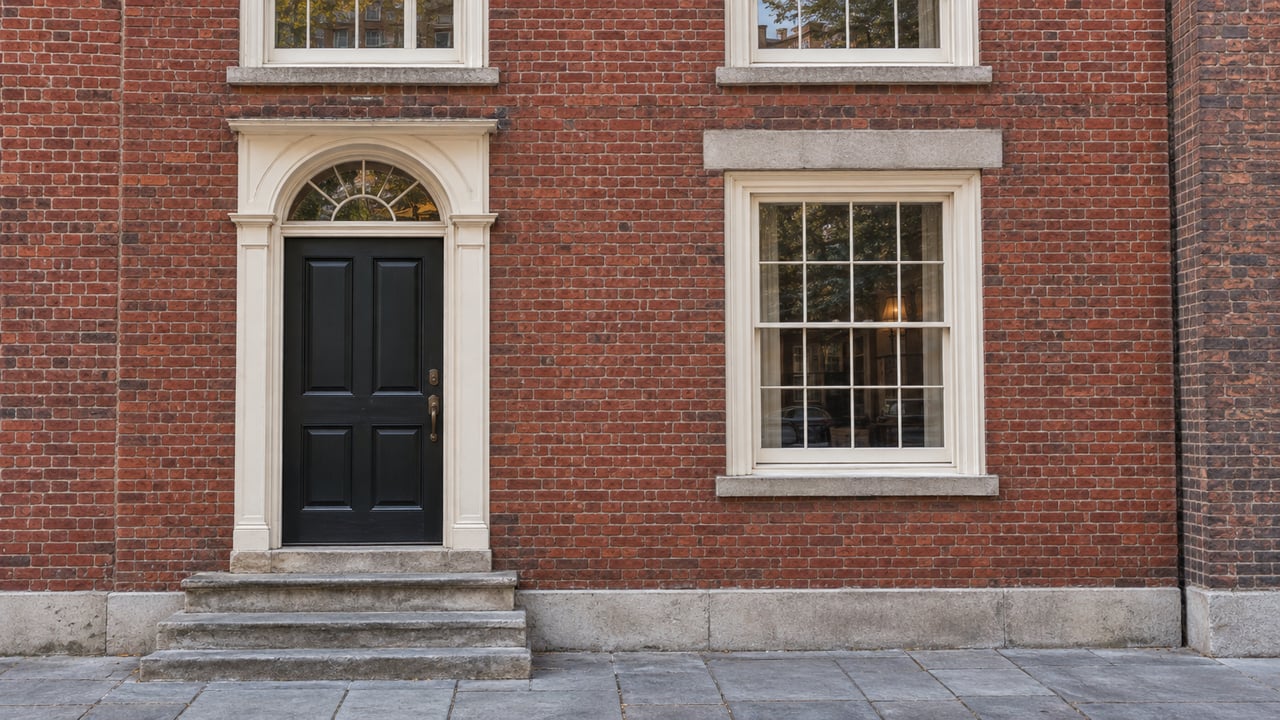
The guidelines are stricter than most buyers expect. Alterations to the design and arrangement of original window openings on a historic façade are considered inappropriate outside of documented restoration. Original window material has to be retained where possible; where beyond repair, replacements must duplicate the existing openings, sash, glass, lintels, sills, frames, and hardware. Proposed changes in paint color are subject to review. House numbers should be brass or bronze, no more than six inches tall, in a traditional style.
What this changes for a buyer is the meaning of "renovation." A first-story window swap on Marlborough Street is not a contractor decision, it is an application, a hearing, and a Certificate. A rooftop deck touches guidelines about mechanical equipment and headhouses. Even routine masonry repointing sits on the commission's administrative docket. None of this is prohibitive, and the commission approves the vast majority of what it hears, but the timing is real and belongs in the underwriting.
How the Questionnaire Rewrites Your Timeline
The condo questionnaire is where both ledgers arrive on one page. Lenders use it to confirm project warrantability, and Back Bay's mix of small self-managed associations and full-service towers produces widely different answer sheets. Turnaround from a professionally managed high-rise usually runs three to ten business days. From a volunteer board in a nine-unit brownstone, one to three weeks is more typical, and edge cases stretch further when a reserve study needs to be updated or a special assessment resolved before closing.
Underwriters look for owner-occupancy in the neighborhood of fifty percent or more, limits on single-entity ownership, commercial square footage capped in the one-quarter to one-third range, master insurance with adequate liability and fidelity coverage, and no material litigation. A pending special assessment does not automatically block approval, but the lender will want the purpose, the amount per unit, the payment status, and often either a paid receipt at closing or an escrow. Some Back Bay associations do not accept FHA financing at all, which is worth confirming before an offer is drafted, not after.
The practical implication is that a Back Bay purchase-and-sale timeline should assume the questionnaire is a variable, not a formality. Buyers who write standard suburban timelines into an offer on a small brownstone often end up asking for extensions their sellers did not plan for.
Reading a Back Bay Listing With Both Ledgers Open
The market gives real evidence that scarcity remains the structural fact of Back Bay. A five-story brownstone at 362 Marlborough Street sold for $11.5 million in December 2025, under contract within four days of a list price just under $11 million. Active inventory across the entire neighborhood rarely exceeds 120 units at once. Nothing about the demand picture is soft.
What has changed is that longer days on market at the mid-luxury tier give attentive buyers the room to actually read the two ledgers before deciding. The right question in front of a listing is not whether $1.6M is a fair number for 1,400 square feet. It is whether the fee funds a real reserve, whether the last five years of minutes show a stable capital plan, whether the exterior work you already have in mind will survive the commission's guidelines, and whether the questionnaire will close on your lender's timeline. A property that answers those four questions cleanly can be worth more at $1.7M than a cheaper unit two blocks away that leaves any of them open.
FAQ
Are Back Bay condo fees tax-deductible?
For most primary residences, condo fees are not tax-deductible. Portions attributable to a documented business or rental use may be treated differently. This is a question for a tax professional, not a listing agent.
Is a brownstone or a tower the better long-term hold?
Neither category wins in the abstract. Brownstones offer historic scale and identifiable addresses with lower recurring dues and more owner-retained risk. Towers centralize systems and services at a higher predictable monthly and typically stronger reserves. The correct answer follows from how the specific building has been budgeted, not from the category.
What should I ask for before writing an offer?
The current-year budget, the last three to five years of financial statements, the most recent reserve study, two years of meeting minutes, the master insurance certificate, and any notices of special assessments, capital projects, or litigation. On a brownstone, add any recent Back Bay Architectural Commission decisions on the building.
Does the Back Bay Architectural Commission ever say no?
It approves most of what it hears, particularly in-kind replacements consistent with the guidelines. It says no, or asks for revisions, when a proposal alters the pattern of original window openings, introduces materials inconsistent with the district, or affects the primary elevation in ways not supported by documented history.
Every high-value Back Bay purchase deserves a reader who can hold both ledgers at once. If you are weighing a specific building, a specific block, or a renovation plan against the numbers in an actual set of condo documents, Robert Kinlin is available for a discreet conversation. Let's Connect.