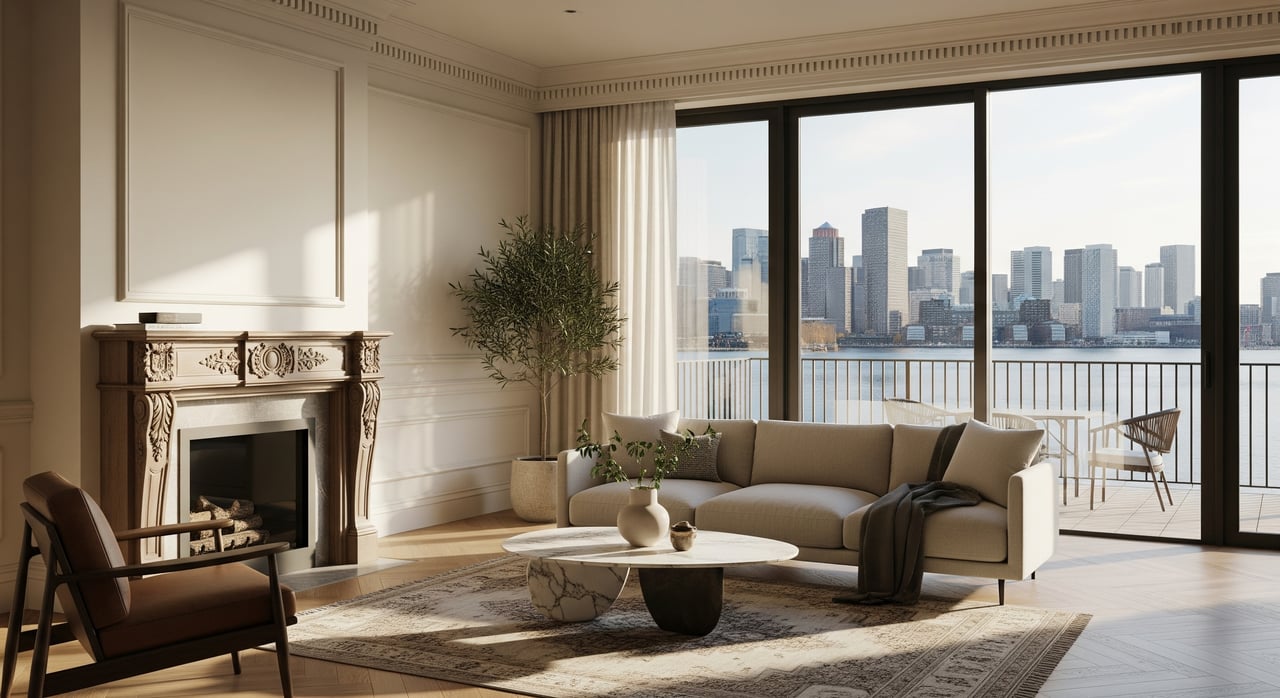
Is your ideal Boston condo a classic brownstone on a tree‑lined avenue or a glass‑walled tower with full‑service amenities? Choosing between Back Bay and the Seaport often comes down to how you live day to day. You want great value, a smooth commute, and a home that fits your pace and preferences. This guide compares architecture, amenities, HOA costs, transit, risk, and investor considerations so you can move forward with clarity. Let’s dive in.
Back Bay at a glance
Back Bay delivers a cohesive, historic setting with 19th‑century brownstones, Beaux‑Arts apartments, and landmarked streetscapes around Commonwealth Avenue, the Public Garden, and Newbury Street. The neighborhood’s prestige is rooted in charm and scarcity, since new supply is limited. Many buyers choose Back Bay for cultural access, refined retail, and a residential feel close to downtown. Typical residents include professionals and empty nesters who prefer character and centrality.
Seaport at a glance
The Seaport, also called the South Boston Waterfront, has transformed from industrial port to a modern, mixed‑use district. You will find new construction towers, restaurants, hotels, and major office campuses tied to tech, finance, and life sciences. This market skews toward contemporary finishes and big amenity stacks, with more supply in the pipeline than Back Bay. It attracts executives, investors, and lifestyle buyers who value waterfront dining and a newer urban feel.
Architecture and building feel
Back Bay: historic substance
Back Bay buildings are largely prewar masonry with brick and brownstone façades and intricate ironwork. Many homes are condo conversions, so floor plans can be unique with varied ceiling heights and non‑standard layouts. The historic district overlay can affect exterior changes, and older structures may limit certain interior renovations due to legacy systems.
Seaport: modern towers
Seaport residences emphasize contemporary design and views. Expect curtain‑wall construction, concrete and steel high‑rises, and open plans with large windows. Most buildings are post‑2000s with mechanical HVAC, garage levels, and extensive amenity spaces such as rooftops and terraces.
Amenity stacks and what they cost
Back Bay: location over amenities
Many Back Bay buildings are smaller and lighter on common spaces. You may see a part‑time doorman or concierge, compact fitness rooms, or a shared rooftop deck. A few larger luxury addresses offer full service, but the area’s value is often its architecture and address rather than an expansive amenity program.
Seaport: full‑service living
Seaport towers often include 24‑hour concierge and security, valet, large fitness centers, pools or rooftop lounges, co‑working areas, pet facilities, parking garages, and lifestyle programming. These features are attractive for a turnkey, lock‑and‑leave life.
How amenities affect dues
Amenity footprints drive staffing, utilities, and maintenance. That means higher monthly HOA fees in many Seaport buildings. Back Bay fees vary. Smaller conversions can feel moderate month to month, yet older systems may lead to special assessments for items like roofs, boilers, or masonry. Newer towers may have fewer near‑term capital projects, but recurring amenity costs remain part of the operating budget. If you are investing, weigh higher dues against potential rent premium from a robust amenity package.
HOA and governance essentials
Before you commit, request a full condo document set and review carefully. Focus on:
- Current operating budget and a breakdown of what dues cover
- Reserve fund balance and the most recent reserve study
- Board meeting minutes for the last 12 to 24 months
- Master insurance policy coverage and deductible levels
- Rental policies, including any caps or short‑term restrictions
- Pet rules and size limits
- Management contract terms and fees
- Parking allocation, guest policies, and any valet or garage agreements
Lenders often scrutinize reserves, insurance, owner‑occupancy ratios, and any litigation. For historic conversions, confirm easements or party wall agreements that might affect renovations.
Risk factors to weigh
Flood and sea‑level exposure
The Seaport sits directly on the waterfront, so it carries higher exposure to coastal flooding and future sea‑level rise. New developments often include resilience measures, but you should still verify flood zone status, building elevation, and any mitigation projects. Back Bay is near the Charles River and may experience localized basement or low‑lying street flooding during severe events, yet overall carries lower coastal exposure than the Seaport.
Historic district considerations in Back Bay
Back Bay’s architectural overlays help protect neighborhood character. Exterior changes usually require review, which adds time and complexity to some projects. Interior work may be shaped by building age and system layouts.
Short‑term rental rules
Boston regulates short‑term rentals, and many condo associations restrict them. Confirm city rules along with your building’s bylaws, especially if you plan to rent for income.
Daily life and commute
Transit and access
Back Bay offers rail‑rich connectivity, including Green Line stops and Back Bay Station for the Orange Line, Commuter Rail, and Amtrak. Many office districts are walkable or a short bike ride away. The Seaport relies on the Silver Line and bus routes, along with water taxis and shuttles, and has direct access to I‑90 via the Ted Williams Tunnel. Public transit coverage is improving, but not as rail‑dense as Back Bay.
Retail, dining, and rhythm
Back Bay features established retail along Newbury and Boylston, plus cultural touchpoints and classic hotels. Evenings often lean toward quieter dining and events. The Seaport brings waterfront restaurants, lively patios, breweries, and event energy from the convention center, concerts, and festivals.
Parking, deliveries, and noise
Many Back Bay buildings do not include on‑site parking. You may rely on resident permits, garages, or leased spaces. The Seaport typically delivers structured parking and valet options, but garage rates reflect the area’s popularity. Event traffic and deliveries can elevate noise in the Seaport, while Back Bay has a more residential character with periodic tourism and retail activity.
Investor snapshot
- Rental demand and yield: The Seaport sees strong interest from young professionals and corporate leases, though new supply can pressure rents. Back Bay draws professionals and long‑term renters, which may support steadier occupancy but more modest short‑term yield upside.
- Operating costs: Model HOA dues, flood insurance where applicable, property management, marketing, and vacancy. In amenity‑heavy towers, recurring expenses are a key part of the underwriting.
- Exit liquidity: Back Bay’s scarcity and prestige foster consistent resale demand among owner‑occupiers. Seaport resale dynamics depend more on macro trends and how each building’s amenity set, views, and finishes stack up.
Quick decision guide
Choose Back Bay if you value
- Historic architecture and a classic Boston address
- Walkable access to culture, retail, and multi‑line transit
- A quieter residential feel with established prestige
- Smaller buildings and fewer large shared amenities
Choose the Seaport if you prefer
- New construction residences with open layouts and large windows
- Full‑service living with concierge, fitness, pools, and lounges
- Proximity to new‑economy employers and waterfront dining
- On‑site structured parking and a lively social scene
Next steps for clarity
Use this checklist to compare specific buildings and units:
- Walk both neighborhoods at weekday and weekend peak times to gauge noise and traffic
- Request the HOA’s current budget, audited financials, reserve study, insurance declarations, board minutes, and management contract
- For Back Bay, inspect older systems like boilers, roofs, and masonry; for Seaport, review maintenance plans and vendor contracts for amenity areas and mechanicals
- Confirm flood zone status, past flood events, and mitigation plans, especially in the Seaport
- Verify rental policies, short‑term rules, and any rental caps
- Model net carrying costs, then compare to rental comps if you plan to invest
- Ask your lender about project approval criteria for the condo association
When you are ready to benchmark specific buildings, a discreet, senior advisor can help you weigh amenity value against operating costs, and architectural charm against renovation risk. For tailored guidance and private showings across Back Bay and the Seaport, connect with Robert Kinlin.
FAQs
What are the main differences between Back Bay and Seaport condos?
- Back Bay emphasizes historic architecture, smaller amenity footprints, and rail‑rich transit, while the Seaport offers modern towers with full‑service amenities and a lively waterfront scene.
How do HOA fees compare between Back Bay and Seaport buildings?
- Seaport towers often carry higher dues due to staffing, utilities, and amenity maintenance; Back Bay fees vary and may be moderate but can include special assessments for older systems.
What should I review in condo documents before buying in Boston?
- Look at the operating budget, reserve study, insurance coverage, board minutes, rental and pet policies, management agreement, and parking terms to assess costs and risks.
Is flood risk a bigger concern in the Seaport than in Back Bay?
- Yes, the Seaport has higher coastal exposure, though many buildings include mitigation; verify flood zone status, elevation, and resilience measures for any property you consider.
Which neighborhood offers better transit options for commuting?
- Back Bay provides broader rail access via the Green and Orange Lines, Commuter Rail, and Amtrak, while the Seaport relies more on the Silver Line, buses, and road access to I‑90.