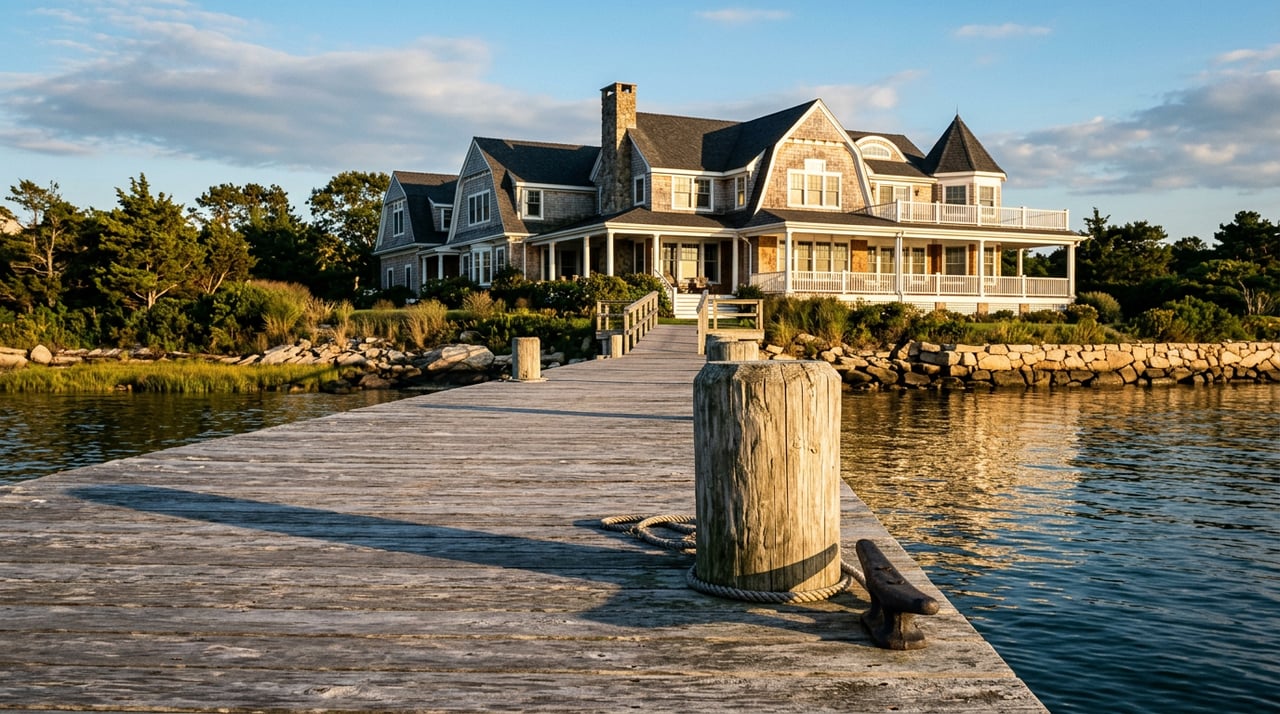
If you picture “waterfront living” in Falmouth as one simple category, this stretch from Woods Hole to West Falmouth quickly proves otherwise. Here, your experience of the water can shift from ferry traffic and village activity to protected harbor coves, then to beaches, dunes, and marsh edges within a short drive. If you are considering a waterfront purchase in this part of Falmouth, understanding those differences can help you choose a property that truly fits how you want to live. Let’s dive in.
Why Falmouth Waterfront Feels So Different
Falmouth describes itself as having roughly 68 to 70 miles of shoreline or coastline, 10 public beaches, 14 harbors, and about 3,000 moorings. That scale helps explain why one waterfront address can feel completely different from another.
Along the Woods Hole to West Falmouth corridor, the shoreline changes in character block by block and harbor by harbor. In practical terms, that means your search should focus not only on price and views, but also on how you want to use the water every day.
Woods Hole Waterfront Living
Village Energy and Working Water
Woods Hole is the most active waterfront setting in this corridor. It functions as the year-round ferry gateway to Martha’s Vineyard, and the terminal remains in reconstruction as of June 2026 with no on-site parking at the terminal.
The town’s coastal inventory describes Great Harbor as a major port for ferries, research vessels, recreational boaters, and some commercial fishing. Little Harbor supports the Coast Guard and recreational moorings, while Eel Pond sits at the center of the village with moorings and a fully developed waterfront edge.
If you are drawn to a setting with movement, boats, walkable village character, and a strong connection to the water economy, Woods Hole stands apart. It is less about seclusion and more about being in the middle of a historic coastal village where maritime activity is part of daily life.
Historic Character Matters Here
Woods Hole is also visually layered. The town’s design guidelines describe a mix of late-18th-century Federal homes, 19th-century Greek Revival and Victorian-era commercial, institutional, residential, and industrial buildings, along with large late-Victorian summer cottages on Nobska Point and Juniper Point and newer maritime structures.
That architectural variety gives Woods Hole a distinct sense of place, but it also comes with rules. Because Woods Hole is a local historic district, visible exterior work requires Historical Commission review before permits can be issued.
Best Fit for Woods Hole Buyers
Woods Hole tends to suit buyers who value access, village life, and a historically dense waterfront setting. If ferry convenience, boating culture, and an active shoreline matter more to you than large private grounds, this area may feel like the right fit.
Quissett Waterfront Living
Protected Harbor Setting
Quissett offers a very different mood. Town planning material describes it as a harbor-side village that evolved into a summer colony of large late-19th- and early-20th-century cottages around protected Quissett Harbor.
That history still shapes the area today. Quissett feels quieter, more intimate, and more landscape-driven than Woods Hole, while still remaining deeply tied to boating and the shoreline.
A Harbor-Focused Lifestyle
The harbor itself is heavily used for recreational boating, and the town classifies Quissett Harbor as deep-draft access with low turnover on the wait list. For buyers, that is an important distinction.
A protected harbor can be a major advantage, but it does not mean unlimited convenience. Quissett offers strong boating appeal, yet the setup is more controlled and restrained than a marina-centered environment.
The town’s dinghy guide notes that Quissett Harbor uses the last dock near the parking lot, west side only. If you plan to use a small boat regularly, details like that matter just as much as the beauty of the harbor itself.
The Landscape Defines the Experience
One of Quissett’s strongest visual cues is The Knob. The town’s coastal inventory describes this peninsula as offering protected public access and westward scenic vistas.
That feature says a lot about the area’s character. Quissett tends to appeal to buyers who want harbor views, a protected-water setting, and a more composed coastal experience rather than the busier rhythm of Woods Hole.
West Falmouth, Sippewissett, and Chapoquoit
The Broadest Range of Waterfront Settings
West Falmouth and its surrounding shoreline offer the widest mix of waterfront experiences in this corridor. Here, you are not choosing only between harbor and village. You may also be weighing marsh views, beach access, dune landscapes, and shoreline conservation areas.
The town’s design guidelines describe West Falmouth as a linear historic district along Route 28A with residential, commercial, and institutional buildings from the 18th through the 20th centuries. Architectural styles include late-Federal and Greek Revival, along with Georgian, Italianate, Second Empire, Queen Anne, early Bungalows, and Colonial Revival.
Harbor, Marsh, and Beach in One Area
The town’s coastal inventory describes West Falmouth Harbor as a well-protected water body with sandy beach, salt marsh, and the large dune complex at the Chapoquoit peninsula. It also describes Sippewissett as largely wetlands, including Black Beach as a conservation area, Little Sippewissett Marsh, and Wood Neck Beach as a buffer between the bay and the marsh system.
This combination gives the area a wider environmental range than either Woods Hole or Quissett. You may find one property centered on harbor access, another focused on beach living, and another defined more by open marsh views and a quieter natural edge.
Boating Realities in West Falmouth
West Falmouth Harbor remains a working recreational harbor, but buyers should understand its limits. The town says the harbor has shallow-draft limitations, with a maximum draft of 6 feet at mean high water.
The town boat-ramp guide places the landing on Old Dock Road, and the current dinghy guide says West Falmouth Harbor uses the north side of the dock, with south-side loading and unloading only. For anyone planning frequent boating, that routine is worth understanding before you buy.
Beach Access Varies by Location
Beach access also changes materially from one part of this stretch to another. The Beach Department says Falmouth staffs 10 beaches, and within this corridor Surf Drive is public welcome, while Wood Neck and Chapoquoit are sticker parking only.
Chapoquoit is also monitored later in the day than most beaches. That means your daily waterfront experience may depend as much on beach access logistics as on the water view from the property itself.
What Waterfront Buyers Should Check First
Do Not Assume a Mooring Comes With the House
In Falmouth, a water view and boating access are not the same thing. The town states that its harbors are wait-listed, applications are accepted from January 1 through March 15, moorings may not be sold, moorings do not convey with a property, and renting a mooring is against town regulations.
That is one of the most important details for buyers in this market. A home near the harbor may offer an exceptional setting, but it does not automatically provide the boating setup you may imagine.
Learn the Dinghy and Dock Routine
The town’s dinghy-access rules are highly specific, and they can shape your daily use of the water. Great Harbor in Woods Hole has no town dinghy facilities, Eel Pond uses the north side of the town dock only, Little Harbor uses the floats near the Coast Guard Station, Quissett uses the west side of the last dock near the parking lot, and West Falmouth Harbor uses the north side of the dock with south-side loading and unloading only.
For some buyers, these are minor details. For others, they are central to how easy and enjoyable the property will feel over time.
Understand the Coastal Environment
These waterfront areas are not only scenic. They are also active coastal systems.
The town identifies West Falmouth Harbor, Great Harbor Woods Hole, and Quissett Harbor as shellfish areas, and notes that West Falmouth Harbor is a common seeding area for oysters, quahogs, and bay scallops. That working-water context is part of what makes this corridor distinctive.
Renovation and Risk Considerations
Historic District Review
For many luxury buyers, the appeal of this corridor includes architectural character and legacy value. At the same time, the rules around visible exterior changes can affect renovation plans.
The Historical Commission states that all work visible from a public way within a local historic district requires a Certificate of Appropriateness or administrative review before a building or sign permit can be granted. Woods Hole, Quissett, and West Falmouth are all local historic districts, so that review process should be part of your planning from the start.
Flood and Erosion Awareness
Flood and erosion conditions also deserve careful attention. Falmouth’s flood-information resources include separate FEMA and FIRM panels for West Falmouth Harbor, Sippiwissett Marsh, Quissett Harbor, Woods Hole, and Nobska, and the town’s coastal-resilience work notes exposure to sea-level rise, storm surge, flooding, and erosion.
The town’s Surf Drive feasibility study also identifies that area as one of Falmouth’s most erosion-prone coastal roadways. For buyers, this is a reminder to evaluate not just the beauty of the shoreline, but also the longer-term stewardship a waterfront property may require.
Choosing the Right Falmouth Waterfront
Across this stretch of Falmouth, the right fit depends on how you want to live near the water. Woods Hole offers the most active and institutionally connected waterfront setting. Quissett centers on a protected harbor and a more private, landscape-oriented feel. West Falmouth, Sippewissett, and Chapoquoit offer the broadest range, from harbor boating to beach access to marsh and dune scenery.
For many buyers, the best question is not simply whether a property is on the water. It is whether that water is meant for views, swimming, harbor boating, or the rhythm of daily coastal living.
If you are considering a waterfront purchase or sale in Falmouth, a measured understanding of these micro-locations can make all the difference. For discreet guidance on Cape Cod waterfront properties, connect with Robert Kinlin.
FAQs
What makes Woods Hole different from other Falmouth waterfront areas?
- Woods Hole is the most active part of the corridor, with year-round ferry service, working harbor activity, recreational boating, and a compact historic village setting.
Is Quissett a good fit for buyers who want boating access in Falmouth?
- Quissett can be a strong fit if you want protected-water boating and harbor character, but the harbor is low-turnover and access logistics are more limited than a marina-style setup.
What is the waterfront character of West Falmouth and Sippewissett?
- West Falmouth and Sippewissett offer the broadest mix in the corridor, including protected harbor areas, sandy beach, salt marsh, dunes, wetlands, and conservation-oriented shoreline.
Do moorings transfer with waterfront homes in Falmouth?
- No. The town states that moorings do not convey with a property, may not be sold, and may not be rented.
Are there historic district rules for waterfront homes in Woods Hole, Quissett, and West Falmouth?
- Yes. All three areas are local historic districts, and visible exterior work from a public way requires Historical Commission review before permits can be issued.
What should waterfront buyers in Falmouth review besides the home itself?
- Buyers should review harbor access, mooring rules, dinghy and dock logistics, beach access rules, flood mapping, erosion exposure, and any historic district requirements tied to the property.